
Save £40 on initial consultations

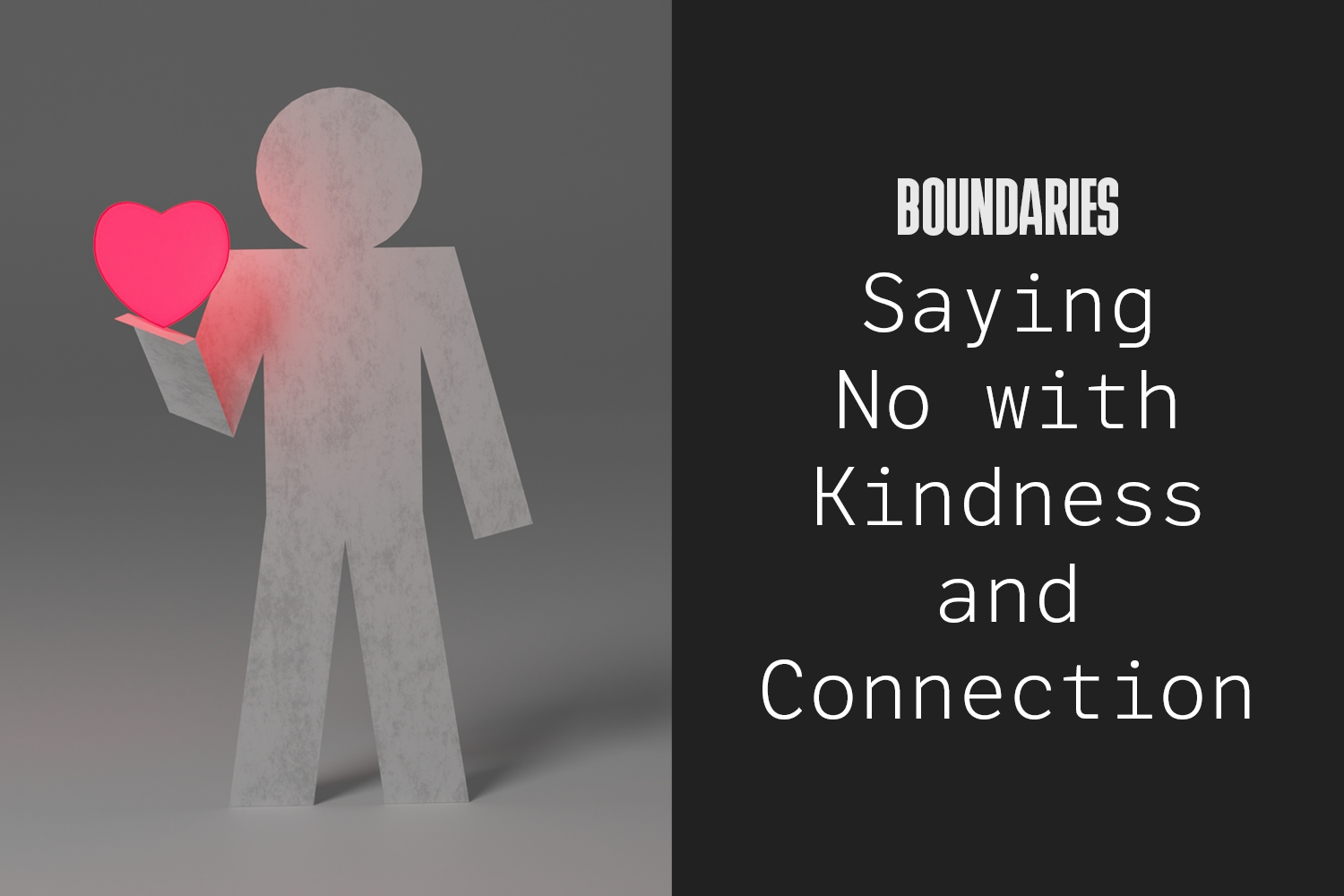
We are taught to be accommodating. To be the one who helps, who listens, who shows up.
There is a quiet nobility in that, but there is also a cost. Often, it’s a body that feels stretched thin, a nervous system that never quite stands down.
Many people fear that setting a boundary means pushing someone away. Choosing to rest is an act of selfishness.
At Ground Chiropractic, we see the physical results of this belief: shoulders that carry the weight of others’ expectations and spines that have learned to brace against the world.
True kindness, however, does not require self-sacrifice. It requires sustainability.
Your body communicates with a clarity that words often lack. A wave of fatigue before a social event. A knot in your stomach when asked for a favour. A shallow breath when you feel obligated to say yes.
These are not weaknesses. They are pure, simple data.
Others may not understand why you need to cancel plans or take time for yourself. They don’t need to.
Your responsibility is to the signal, not to the audience. When you honour your body’s need for rest or space, you are tending to the very foundation from which all genuine connection grows.
A boundary is not a wall. It is a clear and honest statement of your capacity. A resentful “yes” creates far more distance than a kind and honest “no.”
When you say no to something you lack the energy for, you preserve the integrity of your future interactions. You build trust with yourself, and you show others that your presence is something you offer freely, not out of obligation.
This clarity allows for more authentic relationships. It prevents the slow erosion of connection that comes from unspoken resentment.
Guilt is often the price we pay for prioritising our own well-being. We feel we must earn our rest through exhaustion.
Consider this: rest is not a reward. It is a prerequisite for healing. Your nervous system cannot repair itself when it is in a constant state of output.
Choosing to rest is a direct instruction to your body that it is safe to downshift, to recover, and to heal. This choice is a profound act of self-respect.
A “no” to an external demand is often a deep and resounding “yes” to your own recovery. It creates the space your body needs to let go of chronic tension and move towards ease.
In our practice, we feel the stories your body tells. We notice the posture of accommodation – the slight forward roll of the shoulders, the tension held deep in the hips. These are physical patterns of a system that has given more than it has.
An adjustment can help release this stored tension. It can reintroduce a sense of ease and safety to the nervous system. But the work continues with you.
As you learn to listen to your body and honour its signals, you are doing the same work on a different level. You are creating the internal safety that allows your body to hold its adjustments longer and to find a new, more grounded way of being.
You are practising kindness without compromise, and your body will thank you for it.

Regus Building, 1000 Lakeside North Harbour, Western Road Building, Portsmouth PO6 3EZ

Branding & website design by theshapingbay.com